Home / Japan / Tokyo / Ota Accommodation
Tokyo / Ota Accommodation
Villaria Omori
Villaria Omori
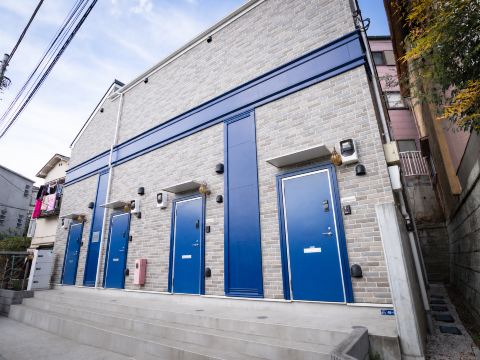
Near Toei Asakusa Line Nishimagome Station | A 40㎡ family apartment with two-level living space — compare transport, beds, and check-in rules first

Photo source: Trip.com
How Would I Choose This Stay?
- The 40㎡ family room combines sleeping, living, and dining space, leaving luggage arrangements more flexible.
- For groups, this place’s biggest draw is that daily life can be centred in a single unit, but ‘maximum occupancy’ cannot be converted directly into one separate bed per person. It uses self check-in, and the property sits on a residential street rather than right outside a station; late-night arrivals must sort out key pickup and the final leg of the journey in advance.
- Self check-in requires getting door-access/key information in advance; last-minute arrivals need extra preparation.
Villaria Omori is not about a traditional hotel front desk; it is about treating a 40㎡ family room as a small living base. The listing shows one double bed and one single bed, with kitchen, dining, and living space kept; I would recommend it to groups of around three travelling together who want to set their own schedule, carry more luggage, and accept handling check-in themselves.
For groups, this place’s biggest draw is that daily life can be centred in a single unit, but ‘maximum occupancy’ cannot be converted directly into one separate bed per person. It uses self check-in, and the property sits on a residential street rather than right outside a station; late-night arrivals must sort out key pickup and the final leg of the journey in advance.
Location and Transport: How Would I Get There and Plan Haneda and City Trips?
The address is Urban Retreat Nishimagome 104, 4-chome-46-6 Minamimagome, Ota Ward. Minamimagome is a residential neighbourhood; after taking the Toei Asakusa Line to Nishimagome Station, you still need to navigate by the actual intersection and address. This is not a chain hotel beside JR Omori Station, nor accommodation connected directly to a Haneda terminal.
If this trip moves between Haneda, Shinagawa, and central Tokyo, I would first put Nishimagome Station, the actual address, and each day’s transfer direction on one route map. Travelling with large luggage and children, the walk from the station exit to the residential-area entrance is more likely to drain energy than saving one stop on the train, so I would not treat the listing name’s ‘convenient transport’ as a fixed walking time in minutes.
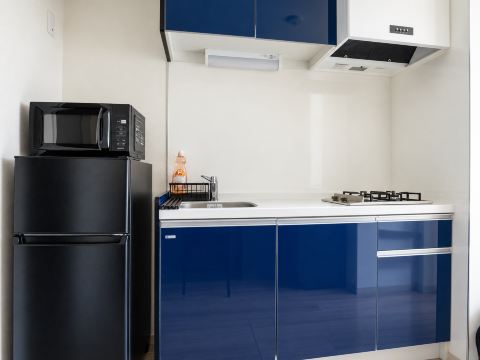
Minamimagome leans more toward everyday residential-street life, unlike the commercial density around JR Kamata and JR Omori. This place has a kitchen, dining table, and refrigerator, so supermarket shopping and simple cooking back in the room can replace eating out for every meal; but I would not write restaurant hours that were not verified before check-in as dependable late-night options.
I would save the address in navigation first, and keep the Japanese station names handy while riding trains, so as not to mistake different exits in Ota Ward for the same exit. If you drag luggage, change trains, and rush to airport check-in on the same day, station-to-station ride time alone cannot estimate the whole journey; the walk from the room door to the station, the walk to the correct platform, and the airline’s check-in each need their own time allowance. The location here is ‘Urban Retreat Nishimagome 104, 4-chōme-46-6 Minamimagome, Ota Ward, Tokyo, 1430025, Japan’.
Room Types and Beds Compared: Check the Room Number First, Then Decide Which Room to Book
I would not compare only the cheapest room type at the same property. What really affects the experience is each room number’s bed count, size, how many people share the living space, and the ratio of sleeping area to luggage passage. When choosing a room, first confirm the actual headcount, then compare whether beds can be split and how much room there is to move; price and cancellation terms stay for the final step.
| Room Type / Room No. | Size | Bed Configuration | Known Capacity |
|---|---|---|---|
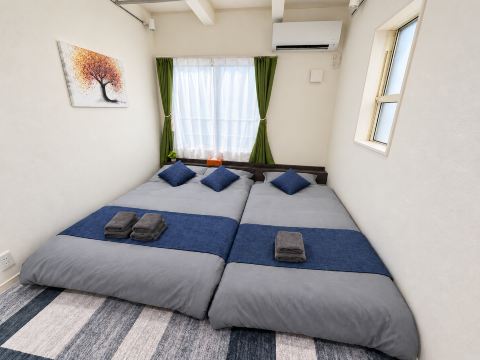
| Family Room | 40m² | 1 single bed, 1 double bed | Up to 3 adults |
Family Room | Bed and Luggage Layout
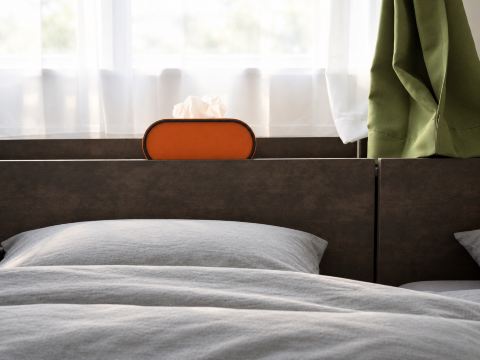
The family room’s listed size is 40m², with 1 single bed and 1 double bed. The listing says up to 3 adults can be arranged, but headcount and whether each person has a separate bed are two different things. The size sits between a small business room and a large apartment, and how spacious it actually feels depends on how the beds, table, and living area are arranged. The room’s smoking information is non-smoking, a condition anyone sensitive to smoke must verify.

Photo source: Trip.com
The ‘capacity’ above is the booking listing’s arrangement for headcount; it does not mean the same number of separate beds. If friends rather than partners are travelling together, I would first check whether each person can sleep comfortably; for families with children, note that free child stays often come with a ‘no extra bed’ condition — do not assume a child bed is included just because it is free.
Once bed arrangements are decided, I would then compare whether luggage can be opened, whether a work desk is needed, and how private and shared space is divided over several days. A 40㎡ family-style apartment with two-level living space like Villaria Omori can easily mislead through its room name; the real way to avoid booking the wrong room is to put room number, size, bed count, and fellow travellers’ needs in one table.
Check-in Style, Living Facilities, and How They Feel in Use
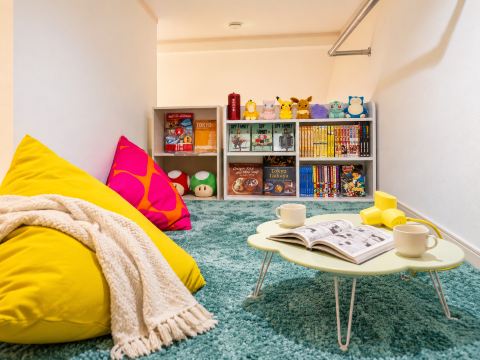
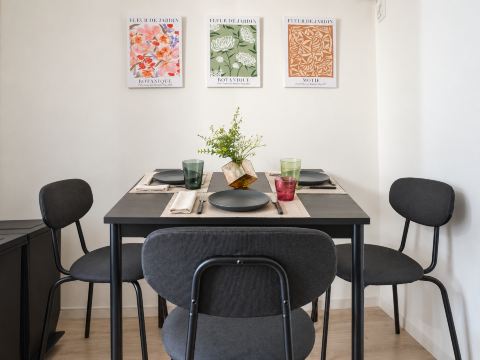
The photos clearly show the family room’s bedroom, living room, dining table, and kitchen. 40㎡ does not mean a single empty room; sleeping and living space are used separately, so people who want to eat in the room, prepare a simple breakfast, or deal with laundry during the trip will get more out of this layout than someone who only returns to sleep. The room listing also includes a washing machine, especially valuable for stays of several nights.
I would arrange check-in conditions according to the room type booked that time and the property’s policy, rather than mixing photos from different room numbers together. This property’s check-in rules are especially worth remembering: the relevant times and methods are listed in the booking information and should be confirmed before departure. With late flights, staggered arrivals, or further transport connections, the sooner door-opening arrangements are settled, the less likely the actual arrival will disrupt the itinerary.
This property does not serve breakfast, so I would settle what to eat the next day together with departure transport the night before; travelling with several people, preparing early beats splitting up with luggage in the morning to hunt for a restaurant.


How to Plan Morning Departures and Check-out Times
This property is confirmed not to serve breakfast. In the morning I would first check whether the day means rushing to a flight, heading into central Tokyo, or checking out to transfer, then decide whether to take breakfast away or use nearby dining options; travelling with family, at least allow time from the room door to the station.
One Night Versus Consecutive Nights: The Criteria Are Actually Different
Just One Night: How to Arrange Departure and Check-in?
For just one overnight stay, I care more about whether the check-in process and the early-morning departure are smooth. If you only get entry information that evening and then have to haul large luggage through alleyways looking for the building, even a larger apartment may be less hassle-free than a small business hotel in front of a station.
If the flight arrives late, I would arrange the day’s final leg of transport, phone roaming, and battery level in advance; all the more so with self check-in properties. A one-night stay does not require using every facility — just make sure you can get in smoothly, sleep well, and depart on your own check-out time.
Three Nights or More: How to Balance Activity Space and Daily Rhythm?
For stays of three nights or more, this place can play to its strengths instead: the living area can hold luggage, the dining table does not compete with the beds for space, and laundry and simple cooking have real uses. Families with children still need to match bed count against actual headcount first, rather than booking on the child-stay policy alone.
For consecutive nights I would think about bedding layout, daily return transport, and laundry storage together: if you enter and exit from the same station every day, familiarity with the station exit may grow more valuable the longer you stay; conversely, a room that is too small or forces sharing common areas with fellow travellers will also become more obvious the longer you stay. Do not decide the whole journey from how convenient the first night looked.
Pros and Cons I Would Include in a Booking Comparison
For groups, this place’s biggest draw is that daily life can be centred in a single unit, but ‘maximum occupancy’ cannot be converted directly into one separate bed per person. It uses self check-in, and the property sits on a residential street rather than right outside a station; late-night arrivals must sort out key pickup and the final leg of the journey in advance.
Pros
- The 40㎡ family room combines sleeping, living, and dining space, leaving luggage arrangements more flexible.
- The room listing confirms a washing machine and refrigerator, suited to multi-night, live-in-style stays.
- Real photos showing the kitchen and dining table make clear in advance that this is not simply a bed rental.
Trade-offs to Accept
- Self check-in requires getting door-access/key information in advance; last-minute arrivals need extra preparation.
- It is not right by JR Omori Station’s main entrance, so the ‘Omori’ in the name must not be read as a station-front hotel.
- One double bed plus one single bed does not equal one bed for every fellow traveller.
These pros and cons are not labels of good or bad for the property; they let each traveller judge by itinerary. If this trip’s focus is the area around Toei Asakusa Line Nishimagome Station and nearby routes, I would raise transport in priority; if there are many fellow travellers who also want to eat or work in the room, I would confirm bed types and living space before looking at price.
Conclusion: Who Would I Recommend This to for This Tokyo Trip?
I would put Villaria Omori to families or friends who want to live like in a small apartment and are willing to arrange their own meals and entry; if the only need is catching an early Haneda flight and wanting a staffed front desk the moment you exit the station, I would not put it first.
My booking order is: first confirm the actual hotel address and transport stations, then identify room number, size, and beds from the room name, then check check-in times and whether self key pickup is needed, and finally compare total price. Choosing Villaria Omori this way fits the conditions actually needed during the trip better than looking only at star rating or the lowest one-night price.
Fact-check date: 2026-10-28