Home / Japan / Tokyo / Ota Hotels
TOKYO / OTA
Smart VILLA Green Court Haginaka
Smart VILLA Green Court Haginaka
Haginaka, Ota Ward, near the Keikyu Airport Line | Large 105 m² apartment, Room 301, for up to 13 guests — compare access, beds, and check-in rules first

Photo source: Trip.com
How would I choose this stay?
- Apartment 301 is 105 m², with two bedrooms plus shared living and dining space
- The booking listing clearly states check-in from 16:00 to 22:00; if you plan to arrive after 22:00, you must contact them in advance by email. All fellow travelers should follow one shared set of check-in rules, otherwise late flights and staggered arrivals can easily tangle pickups, keys, door opening, and sleep arrangements.
- Check-in 16:00–22:00; arrivals after 22:00 must be arranged in advance
Smart VILLA Green Court Haginaka is the most obviously group-oriented stay in this batch: Room 301 is 105 m², listed with two bedrooms and a living area, totaling several double beds plus one Japanese-style mattress, for up to 13 guests. That capacity suits families or large groups, but “sleeps 13” does not mean everyone has a separate single bed or can all open large suitcases at the same time.
The booking listing clearly states check-in from 16:00 to 22:00; if you plan to arrive after 22:00, you must contact them in advance by email. All fellow travelers should follow one shared set of check-in rules, otherwise late flights and staggered arrivals can easily tangle pickups, keys, door opening, and sleep arrangements.
Location and access: how would I get there, and how would I plan Haneda and central Tokyo trips?
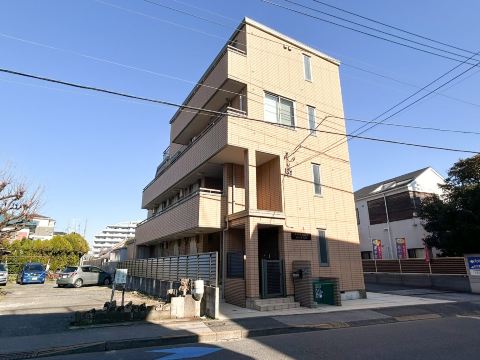
The apartment address is 1-chome 13-18 Haginaka, Ota Ward, Tokyo. Getting here should be planned around the address and the chosen Keikyu Airport Line station, and being in Ota Ward should not simply be equated with “next to the airport.” For groups of more than ten, the final walk or taxi ride must be estimated together with all luggage.
When a large group arrives in Tokyo, I would first choose flights and arrival stations, then decide whether this 105 m² apartment is really the least-effort option. A dozen or so people each hauling luggage from the airport may not suit a route with many transfers; the same address may need split-group travel so the first arrivals can enter on schedule.
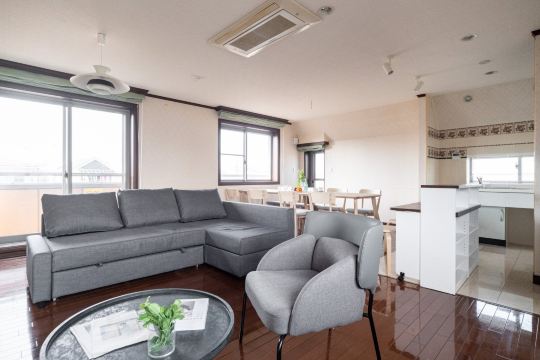
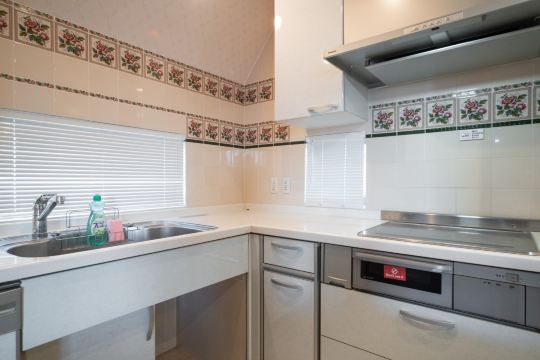
Haginaka is a lived-in neighborhood, and staying in a large apartment suits plans that include shopping, family gatherings, and shared indoor meals. The room type includes a refrigerator, washing machine, and other facilities, and the photos show the living area, dining table, kitchen, and washing facilities; with many people, agreeing in advance who shops and who cleans beats everyone heading out for breakfast on the spur of the moment.
I would save the property address in navigation first, and when riding trains keep the Japanese station names as well, so as not to mistake different Ota Ward station exits for the same one. If you drag luggage, change trains, and rush to airport check-in on the same day, you cannot estimate the whole journey from station-to-station ride time alone; the walk from the room door to the station, the walk to the correct platform, and airline check-in each need their own time allowance. The location here is “1-13-18 Haginaka, Ota Ward, Tokyo, Japan”.
Room types and beds compared: check the room number first, then decide which room to book
I would not compare only the cheapest room type at the same property. What really shapes the experience here is each room number’s bed count, floor area, how many people share the living space, and the balance between sleeping areas and luggage space. When choosing a room, first confirm the actual party size, then compare whether people can sleep in separate beds and how much room there is to move around indoors; price and cancellation terms come last.
| Room type / room number | Floor area | Beds | Known capacity |
|---|---|---|---|
| Room 301 | 105m² | 2 bedrooms: 5 double beds, 1 Japanese-style mattress; 1 living room: 1 double bed | Up to 13 adults |
Room 301 | Beds and luggage layout
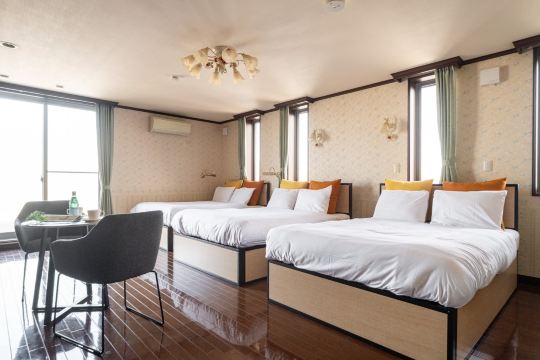
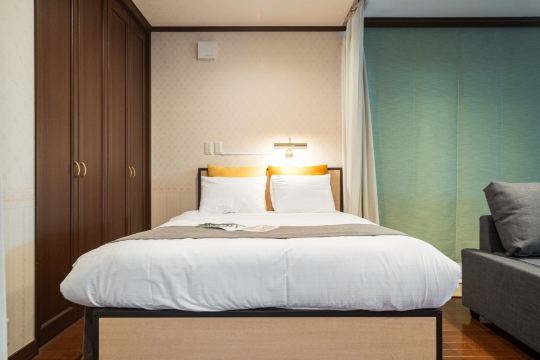
Room 301 is listed at 105 m², with a bed configuration of 2 bedrooms: 5 double beds and 1 Japanese-style mattress; 1 living room: 1 double bed. The listing shows up to 13 adults can be accommodated, but headcount and whether each person has a separate bed are two different things. The larger space suits long stays or many people, but the bedrooms, living room, and mattresses are not all separate sleeping rooms; if fellow travelers keep different schedules, allocating beds matters more than total floor area. The room is listed as non-smoking, a condition people sensitive to cigarette smoke must verify.

Photo source: Trip.com
The “capacity” above is how the booking listing assigns headcount; it does not mean there are the same number of separate beds. If traveling with friends rather than a partner, I would first check whether everyone can sleep comfortably on their own; families with children should note that free stays for children often come with a “no extra bed” condition, so free does not automatically mean an extra child’s bed is provided.
Only after deciding on beds would I compare whether luggage can be opened, whether a work desk is needed, and how private and shared space is divided over several nights. With a large 105 m² apartment like Smart VILLA Green Court Haginaka, Room 301, for up to 13 guests, room-type names easily create a false impression; the real way to avoid booking the wrong room is to put room number, floor area, bed count, and fellow travelers’ needs in a single table.
Check-in style, living facilities, and what staying here feels like
Apartment 301 has several beds plus shared living space and a dining table, but some of those beds are in the living area, so family members on different schedules need to plan ahead. Two bedrooms offer some separation, but that does not mean every small family gets its own private room; I would turn bed positions, bathroom order, and luggage storage into a pre-arrival task list.
I would arrange check-in conditions around the room type actually booked and the property’s policy, rather than mixing up photos of different room numbers. This property’s check-in rules are especially worth remembering: the relevant times and methods are listed in the booking information and should be confirmed before departure. With a late flight, staggered arrivals, or onward connections, the sooner the door-opening method is sorted out, the less likely the trip is disrupted on arrival.
This property does not serve breakfast, so I would plan the next day’s meals together with departure transport the night before; when traveling with several people, preparing early beats splitting up with luggage in the morning to hunt for a restaurant.



How to plan morning departures and check-out times
It is confirmed that this property does not serve breakfast. In the morning I would first check whether the day involves catching a flight, heading into central Tokyo, or checking out to move on, then decide whether to take breakfast away or use nearby dining options; traveling with family, I would at least allow time from the room door to the station.
One night vs. a longer stay: the criteria are actually different
Just one night: how to arrange departure and check-in?
If you are only transiting near Haneda for one night, this kind of large apartment may take more time to coordinate door opening and bed allocation; only if everyone genuinely plans to live together is it worth carefully comparing against splitting into several hotel rooms. The judgment for one day versus four days is very different.
If the flight arrives late, I would sort out the day’s final leg of transport, phone roaming, and battery level in advance — all the more so at a self check-in property. A one-night stay does not require using every facility; what matters is getting into the room smoothly, sleeping well, and leaving by your own check-out time.
Three nights or more: how to balance living space and daily routines?
During a longer stay, the 105 m² shared dining table, kitchen, and washing machine show their real value. Traveling with elders, children, or several families, you need to keep people on different schedules from disturbing each other; do not look only at maximum occupancy and ignore that bathrooms and beds must be used in rotation.
For a longer stay I would think about bedding arrangements, daily round-trip transport, and laundry and storage together: if you pass through the same station entrance every day, familiarity with that entrance may grow more valuable the longer you stay; conversely, a room that is too small or shared areas you must compete for with fellow travelers will also become more noticeable over time. Do not decide the whole trip on how convenient the first night merely looks.
Pros and cons I would put into a booking comparison
The booking listing clearly states check-in from 16:00 to 22:00; if you plan to arrive after 22:00, you must contact them in advance by email. All fellow travelers should follow one shared set of check-in rules, otherwise late flights and staggered arrivals can easily tangle pickups, keys, door opening, and sleep arrangements.
Pros
- Apartment 301 is 105 m², with two bedrooms plus shared living and dining space
- Maximum occupancy of 13, suited to planning a stay for many people together
- Room-type listing confirms practical living facilities including a washing machine and refrigerator
Trade-offs to accept
- Check-in 16:00–22:00; arrivals after 22:00 must be arranged in advance
- A 13-person capacity does not equal 13 separate beds; sleeping spots across rooms and the living area must be allocated
- Bathroom use, coming and going, and luggage arrangements for a large group need extra coordination
These pros and cons are not labels of good or bad for the property; they let each traveler judge by their itinerary. If my priority this time is Haginaka in Ota Ward, the Keikyu Airport Line area, and nearby routes, I would rank access higher; if there are many fellow travelers and meals or work inside the room matter, I would confirm bed types and living space before looking at price.
Conclusion: who would I recommend this to for this Tokyo trip?
I would recommend it to large families or groups of friends who can divide tasks in advance, are used to group living, and need everyone under one roof; travelers who want someone to tidy the room daily and a front desk that can handle requests at any time should look for a large hotel instead.
My booking order is: first confirm the actual hotel address and transport stations, then identify the room number, floor area, and beds from the room-type name, next check check-in times and whether self-service key pickup is needed, and finally compare total prices. Choosing Smart VILLA Green Court Haginaka this way fits the conditions actually needed on the trip better than looking only at star ratings or the lowest nightly price.
Fact-check date: 2026-10-28