TOKYO / OTA / KAMATA
Hotel BB / Crecer Kamata
Hotel BB
JR Kamata Station West Exit | A small apartment-style hotel with 20㎡ single/twin rooms and 28㎡ four-person rooms — compare transport, beds and check-in rules first

Photo source: Trip.com
How would I choose this stay?
- About a 5-minute walk from the JR Kamata West Exit; suits travellers on JR routes
- Booking data shows this is a small four-storey self-check-in stay with stairs only and no lift. For people carrying large luggage, pushing a stroller, or with bad knees, the floor should be a key question before booking; do not ignore the difficulty of going upstairs just because the JR Kamata West Exit is a 5-minute walk away.
- A four-storey building with stairs only and no lift; carrying large luggage or moving with limited mobility is harder
Hotel BB differs from an ordinary single business room in one practical way: single rooms and twin rooms are both 20㎡, and the four-person room is 28㎡. For a solo traveller dragging large luggage who wants room to change and desk space, 20㎡ is more flexible than a 10㎡ small room; but when two people sleep in twin beds, the beds also take up more floor.
Booking data shows this is a small four-storey self-check-in stay with stairs only and no lift. For people carrying large luggage, pushing a stroller, or with bad knees, the floor should be a key question before booking; do not ignore the difficulty of going upstairs just because the JR Kamata West Exit is a 5-minute walk away.
Location and transport: how do I get there, and how do I plan Haneda and central Tokyo trips?
The stay is at 5-18-16 Nishikamata, Ota Ward. Japanese booking transport information lists about a 5-minute walk from the JR Kamata Station West Exit. Travellers entering and leaving via Haneda need to distinguish JR Kamata from Keikyu Kamata; if taking the airport bus to Kamata first, also confirm the alighting exit and the route to the West Exit.
From the JR Kamata West Exit, you can walk through the Nishikamata streets to the hotel. This location works well as a JR base in Kamata for Shinagawa, Tokyo or Yokohama; but if catching the Keikyu Airport Line early the next morning, allow extra time for a transfer or the walk to Keikyu Kamata Station.
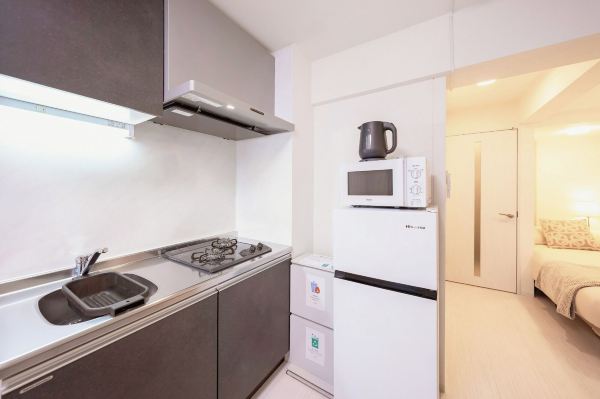
Around Nishikamata there are everyday eateries, convenience stores and places to buy daily necessities, so supplies can be handled before and after entering the station over a stay of several nights. Room data also lists a refrigerator, small kitchen or stove; the official description also mentions an in-room kitchen, tableware and laundry facilities, but that does not mean any amenity may be taken out at will.
I save the stay address in navigation first, and keep the Japanese station names when riding trains, so as not to mistake different exits in Ota Ward for the same exit. If dragging luggage, transferring and rushing to airport check-in on the same day, the whole journey cannot be estimated from inter-station ride time alone; time must be allowed separately for the walk from the room door to the station, to the correct platform, and for airline check-in. The location here is “5-18-16 Nishikamata, Ota Ward, Tokyo, 144-0051, Japan”.
Room types and beds compared: check the room number first, then decide which room to book
I do not compare only the cheapest room type at the same stay. What really shapes the experience here is each room number’s bed count, area, how many people share the living space, and the balance between the sleeping area and luggage passage. When choosing a room, first confirm the actual party size, then compare whether separate beds are possible and how much indoor activity space there is; price and cancellation terms come last.
| Room type / room number | Area | Beds | Stated capacity |
|---|---|---|---|
| Single room | 20m² | 1 single bed | Up to 1 adult |
| Twin room | 20m² | 2 single beds | Up to 2 adults |
| Four-person room | 28m² | 4 single beds | Up to 4 adults |
Single room | beds and luggage layout
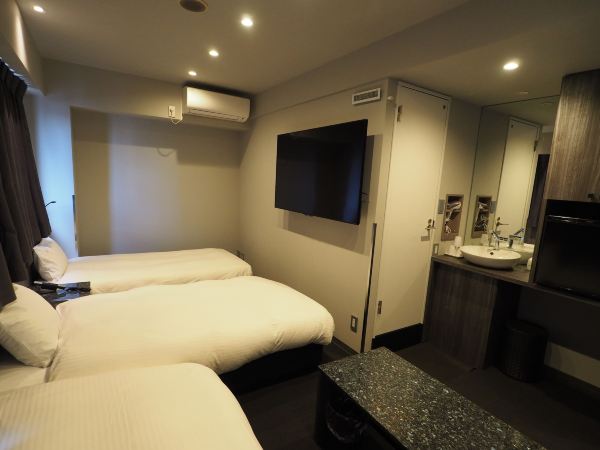
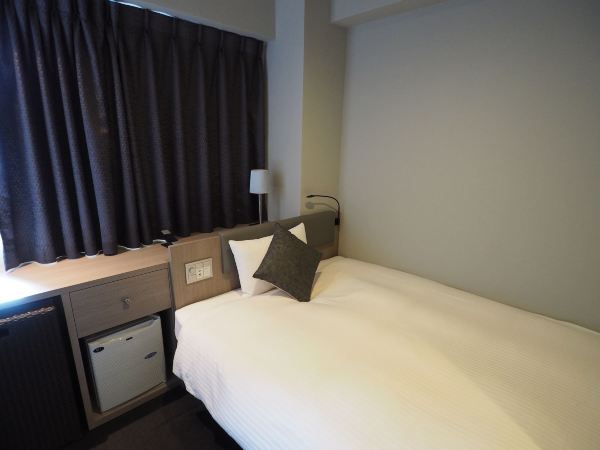
The single room’s stated area is 20m², with 1 single bed. Data shows up to 1 adult can be accommodated, but headcount capacity and whether each person has a separate bed are two different things. The interior is on the compact side; if two people both bring large suitcases, I would first estimate whether the passage beside the bed and the bathroom door still allow smooth passage after unpacking. Room smoking information is non-smoking, a condition anyone sensitive to smoke must check.

Photo source: Trip.com
Twin room | beds and luggage layout
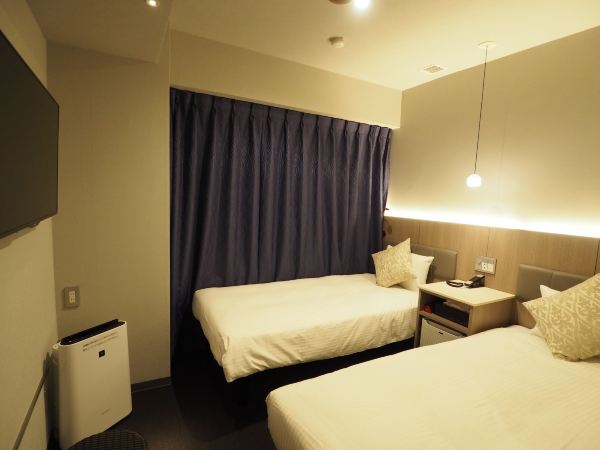
The twin room’s stated area is 20m², with 2 single beds. Data shows up to 2 adults can be accommodated, but headcount capacity and whether each person has a separate bed are two different things. The interior is on the compact side; if two people both bring large suitcases, I would first estimate whether the passage beside the bed and the bathroom door still allow smooth passage after unpacking. Room smoking information is non-smoking, a condition anyone sensitive to smoke must check.

Photo source: Trip.com
Four-person room | beds and luggage layout
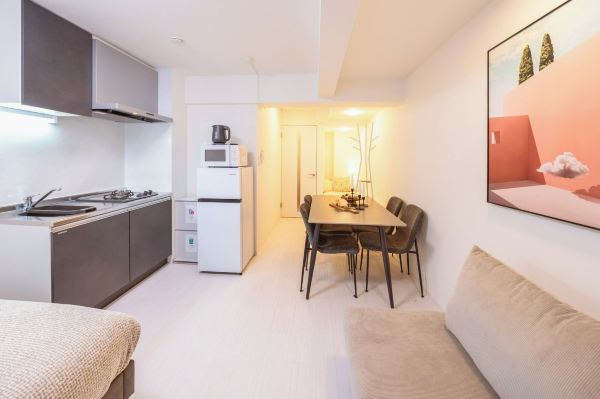
The four-person room’s stated area is 28m², with 4 single beds. Data shows up to 4 adults can be accommodated, but headcount capacity and whether each person has a separate bed are two different things. The area sits between a small business room and a large apartment; the actual feeling of activity depends on how the beds, desk and living area are arranged. Room smoking information is non-smoking, a condition anyone sensitive to smoke must check.
The “capacity” above is the booking data’s arrangement for headcount, not a promise of the same number of separate beds. If travelling with friends rather than a partner, I would first check whether everyone can sleep comfortably on their own; for families with children, note that free stays for children often come with a “no extra bed” condition, so free does not mean an extra child’s bed is provided.
Once beds are decided, I compare whether luggage can be opened, whether a work desk is needed, and how private and shared space is divided over a stay of several days. For a small apartment-style hotel like Hotel BB / Crecer Kamata, with 20㎡ single/twin rooms and 28㎡ four-person rooms, room names easily create a wrong impression; the way to really avoid booking the wrong room is to put room number, area, bed count and companions’ needs in the same table.
Check-in style, daily facilities and how they feel in use
A single room at 20㎡ has one single bed, and a twin room at 20㎡ has two single beds; with the same area but different bed counts, the actual feel of desk and luggage passage can differ a lot. A four-person room at 28㎡ lists four single beds, which for four adults does not equal each person having complete separate floor space.
I arrange check-in conditions according to the room type and stay policy booked this time, rather than mixing photos of different room numbers together. This stay’s check-in rules are especially worth remembering: the relevant times and methods are listed in the booking information and should be confirmed before departure. With a late-night flight, arrivals in separate groups, or a further transfer, the sooner the door-opening method is sorted, the less the actual arrival disrupts the itinerary.


How to plan the morning departure and check-out time
On the morning of departure the next day, I first confirm the check-out flow and the entry direction of the main station. Especially when travelling with several people or carrying large luggage, arranging the route, water top-ups and meal times in advance is more relaxed than checking routes on the spot in the morning.
One night versus a longer stay: the selection criteria are actually different
Just one night: how to arrange departure and check-in?
With only one night, I put whether I can get upstairs smoothly, complete self-check-in and handle next-day transport ahead of in-room facilities. Carrying a 28-inch suitcase, the effect of a four-storey building with no lift matters more than a few extra square metres in the room; if luggage is light and the trip uses JR, this location is attractive.
If the flight arrives late, I would arrange the last leg of transport, phone roaming and remaining battery first; that matters even more at a self-check-in stay. A one-night stay is not about trying every facility, but about getting into the room smoothly, sleeping well, and leaving on my own check-out time.
Three nights or more: how to balance activity space and daily rhythm?
For a longer stay, laundry and simple cooking facilities add convenience; a 20㎡ single room is also better suited to sorting luggage alone. But if planning to go in and out several times a day, staying on a higher floor and carrying large luggage, the no-lift limitation recurs, and the choice should follow stamina and companions’ needs.
For a longer stay, I think about bedding layout, daily round trips and laundry storage together: if I enter and leave from the same station every day, familiarity with the exit may grow more valuable the longer I stay; conversely, a room that is too small or shared space I must compete for with travel companions will feel more obvious the longer I stay. Do not decide the whole trip on the convenience the first night seemed to offer.
The pros and cons I would put into a booking comparison
Booking data shows this is a small four-storey self-check-in stay with stairs only and no lift. For people carrying large luggage, pushing a stroller, or with bad knees, the floor should be a key question before booking; do not ignore the difficulty of going upstairs just because the JR Kamata West Exit is a 5-minute walk away.
Pros
- About a 5-minute walk from the JR Kamata West Exit; suits travellers on JR routes
- Single and twin rooms about 20㎡, four-person room 28㎡, with clear bed specifications
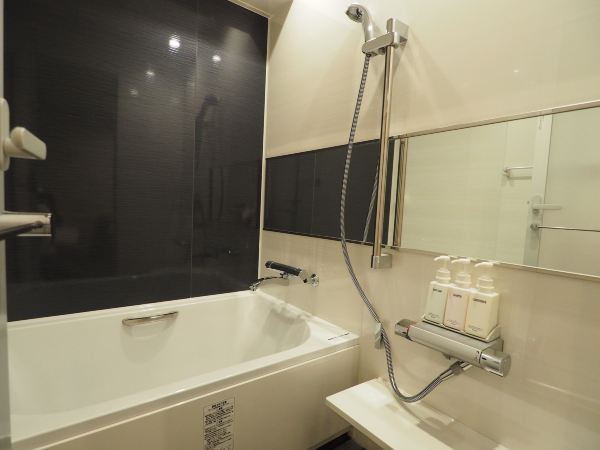
- Rooms have a kitchen, tableware, washing machine and other living facilities
Trade-offs to accept
- A four-storey building with stairs only and no lift; carrying large luggage or moving with limited mobility is harder
- Self-check-in with no staff; you need to be familiar with the machine and the check-in information received
- Twin and four-bed rooms have more beds, so usable floor still needs to be assessed by party size
These pros and cons are not labels of good or bad for the stay, but a way for each traveller to judge by itinerary. If this trip’s priority is the JR Kamata Station West Exit and nearby movement, I would raise transport in priority; if travelling with many companions and needing to eat or work in the room, I would first confirm bed types and living space, then look at price.
Conclusion: who would I recommend this Tokyo trip stay to?
I would recommend Hotel BB to solo travellers or friends who use JR Kamata as a base, are used to unstaffed stays, and can control luggage volume; those bringing a stroller for a small child, with limited mobility, or who dislike climbing stairs should first look for a stay with a lift.
My booking order is: first confirm the hotel’s actual address and transport stations, then identify room number, area and beds from the room name, then check check-in times and whether self key pickup is needed, and finally compare total prices. Choosing Hotel BB / Crecer Kamata this way fits the conditions actually needed on the trip more easily than judging by star rating or the lowest one-night price alone.
Fact-check date: 2026-10-28