Tokyo / Ota Accommodation
CMNkiko Apartment (M House)
M House
Ota Ward residential streets, precise station exit not verified in source material | 37㎡ two-bedroom, two single beds plus one double bed — check transport, bed types and check-in rules first

Photo source: Trip.com
How would I choose this stay?
- The 37㎡ two-bedroom layout with three beds is clear
- The platform lists check-in after 16:00 and check-out before 11:00. A whole apartment like this especially requires getting the host’s entry instructions in advance, and when a group arrives separately, agreeing first who is responsible for contact.
- The source material has no complete street address, so station exits and walking times cannot be verified
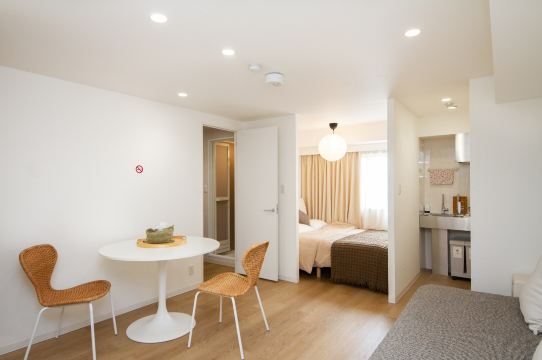
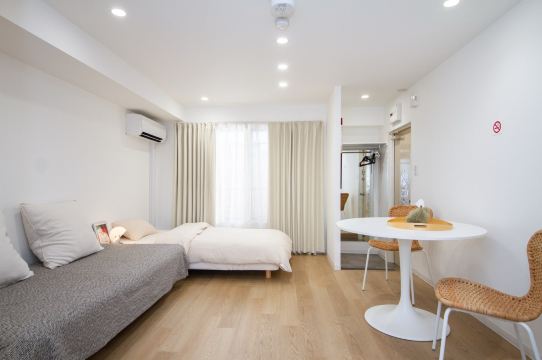
If I were looking for a stay in Tokyo Ota Ward this time, I would put CMNkiko Apartment (M House) on my shortlist, but I would not book it straight away just because of the price or Haneda Airport wording. The room type is a 37㎡ two-bedroom suite, and two single beds plus one double bed let four friends or a family arrange sleeping places. Not everyone gets a separate room, but it is more practical than four people squeezing into one double bed in a business room.
According to the listing information saved so far, its main positioning is a 37㎡ two-bedroom, two single beds plus one double bed. For me, the room number, bed, entry time and actual street location under the same name often matter more than a single platform score in deciding whether a stay suits me; the comparison below follows those four points.
Location and transport: how to choose a route from the station?
The saved information only has a broad Tokyo Ota Ward address, with no verifiable street number, so a particular station exit or walking minutes cannot be inferred from a review saying “close to the station”. Before booking I would confirm the final stretch of the route using the platform’s actual location map.
The address currently saved is written as “Ota Ward, Tokyo, Japan”. I would first mark this address on a map, then re-plan according to the railway station and exit actually chosen; if the material only reaches the postal district without a street number, precise walking minutes can only be counted once the booking confirmation supplies the missing detail, and a place name will not be treated as a verified address.
If arriving from Haneda Airport, I would first confirm the actual terminal that day, train stops, transfers and the exit to get off at; if a Tokyo trip means going into the city every day, the return transfer time each day must also be counted. The Ota Ward residential streets, with the precise station exit not verified in the source material, are my reference point for comparing nearby routes, not a station directly connected to every room.
Room types compared: which bed and room number suit me?
I would first write the number of guests, whether separate beds are needed, the floor and the room area on one list, and not assume all room types are the same just because of the property name. Apartments in particular may list several room numbers in one building, while a capsule hotel may split gender, upper and lower levels into different options.
| Room type / Room no. | Listed area | Beds | Occupancy |
|---|---|---|---|
| Comfortable and Affordable Two-Bedroom Suite | 37m² | 2 bedrooms: 2 single beds, 1 double bed; 1 living room | Listed as 4 adults |
Comfortable and Affordable Two-Bedroom Suite | Which travelling groups suit it?
Comfortable and Affordable Two-Bedroom Suite: the published room type is listed as 37m²; sleeping information is 2 bedrooms: 2 single beds, 1 double bed; 1 living room. This room type is listed as non-smoking.
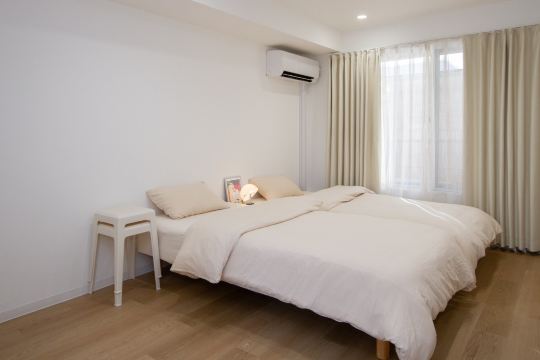
I would in particular keep the bed type and the maximum occupancy number apart: sleeping four does not necessarily mean four separate beds; if there is a sofa bed or a Japanese mattress, who sleeps on it and whether it must be folded away daily still need confirming. Choosing the room number first and then looking at photos is more useful than only looking at the cheapest price.
Indoor facilities, check-in times and photo details
The platform lists check-in after 16:00 and check-out before 11:00. A whole apartment like this especially requires getting the host’s entry instructions in advance, and when a group arrives separately, agreeing first who is responsible for contact.
After looking at the room types, I would also write the check-in and check-out times into the itinerary. The saved rules list: Check-in: After 16:00; Check-out: Before 11:00. For late flights and companions arriving separately, it is essential to confirm in advance whether entry is possible within the stated hours.
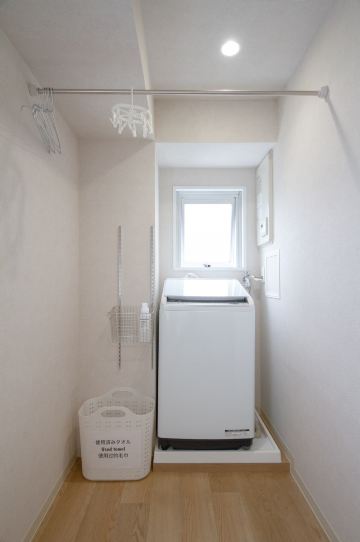
Room photos can only show the angle already photographed. If there is a washing machine, kitchenware, a fridge, shared bathrooms or lockers, the information for the room number actually booked governs; one photo from a public gallery cannot be used to infer that all room types have the same facilities.


What staying here feels like: which reviews and trade-offs would I care about?
Several Chinese-language reviews mention the host’s quick replies, daily necessities, kitchen and laundry facilities, and one family’s experience of staying more than ten days in a row; but these were those travellers’ impressions at the time and do not mean every stay includes pick-up or gifts.
When reading stay reviews I read the date and the room type together: room types, management methods and facilities may change over time, so one person’s single stay cannot be taken as a quality guarantee for all dates. If no readable review has been saved, I judge only from the room-type information already available and do not invent guest impressions that do not exist.
When a problem keeps recurring, I first ask “will this affect this trip’s companions?” — for example carrying cases upstairs, entering rooms at night, cigarette smell, shared shower times, or the distance to the city centre. Anything not appearing in the saved reviews is not treated as a negative record that has actually happened.
Breakfast, early flights and check-out arrangements
On the morning of this stay, I would first confirm the check-out time and which station to board at that day, then decide whether to buy breakfast. Whether breakfast is provided has no reliable information to write from, so the actual booking option governs. When dragging luggage to central Tokyo or Haneda Airport, counting walking, platforms and boarding procedures together is more realistic than only memorising train running minutes.
One night versus three nights in a row: the considerations differ
Just one night: what do I sort out first?
For just a one-day short stay, two bedrooms in 37㎡ may not all be used; what really matters is first checking the property’s street number, the check-in contact method, and whether it suits a group arriving together with luggage.
Someone staying just one night does not necessarily need to use every facility of the stay; arriving smoothly, completing check-in, showering, sleeping well and checking out on time matter more. Especially when the itinerary connects to a Haneda flight, I would put last-transport times, the listing’s check-in deadline and mobile connectivity on one checklist.
Several nights in a row: how do I judge value?
If staying a few days, two bedrooms can accommodate people with different routines, and laundry and simple cooking gain value; however, situations where several people use the dining table and bathroom at the same time still need arranging.
The longer the stay, the more important the neighbourhood transport back to the room, clothing organisation, luggage storage and different companions’ routines become. If the trip is mostly out during the day, compact space may be acceptable; if children are along or someone works in the room, room size and bed layout cannot be judged by one night’s price alone.
Pros and cons: a quick comparison before booking
I would put this stay on the shortlist, but also put the following limits into the comparison table, and not simply assume it is convenient because it is in Ota Ward or near Haneda.
Pros
- The 37㎡ two-bedroom layout with three beds is clear
- The saved real photos include the living room, kitchen, bedrooms and laundry facilities
- Some past reviews give positive feedback on host support and long-stay convenience
Trade-offs to accept
- The source material has no complete street address, so station exits and walking times cannot be verified
- Host extras such as pick-ups and gifts mentioned in reviews should not be treated as guaranteed services
- A two-bedroom apartment has no hotel-front-desk-style standard service process
If transport matters most, compare the real station exit and the expected time back to the room first; if multi-person stays matter, bed count, floor and space must come before platform scores. This trade-off list helps me avoid booking just from one large photo on the home page.
Conclusion: what kind of Tokyo traveller would I recommend this to?
The room type is a 37㎡ two-bedroom suite, and two single beds plus one double bed let four friends or a family arrange sleeping places. Not everyone gets a separate room, but it is more practical than four people squeezing into one double bed in a business room.
If staying a few days, two bedrooms can accommodate people with different routines, and laundry and simple cooking gain value; however, situations where several people use the dining table and bathroom at the same time still need arranging.
If I choose CMNkiko Apartment (M House) this time, I would decide in the order “correct address and station exit → room number and bed type → available check-in time → luggage and companion needs → price”, rather than only looking at its name or the lowest price. Different journeys have different best answers, and understanding my own needs matters more than chasing a standard score.
Fact-check date: 2026-10-26